
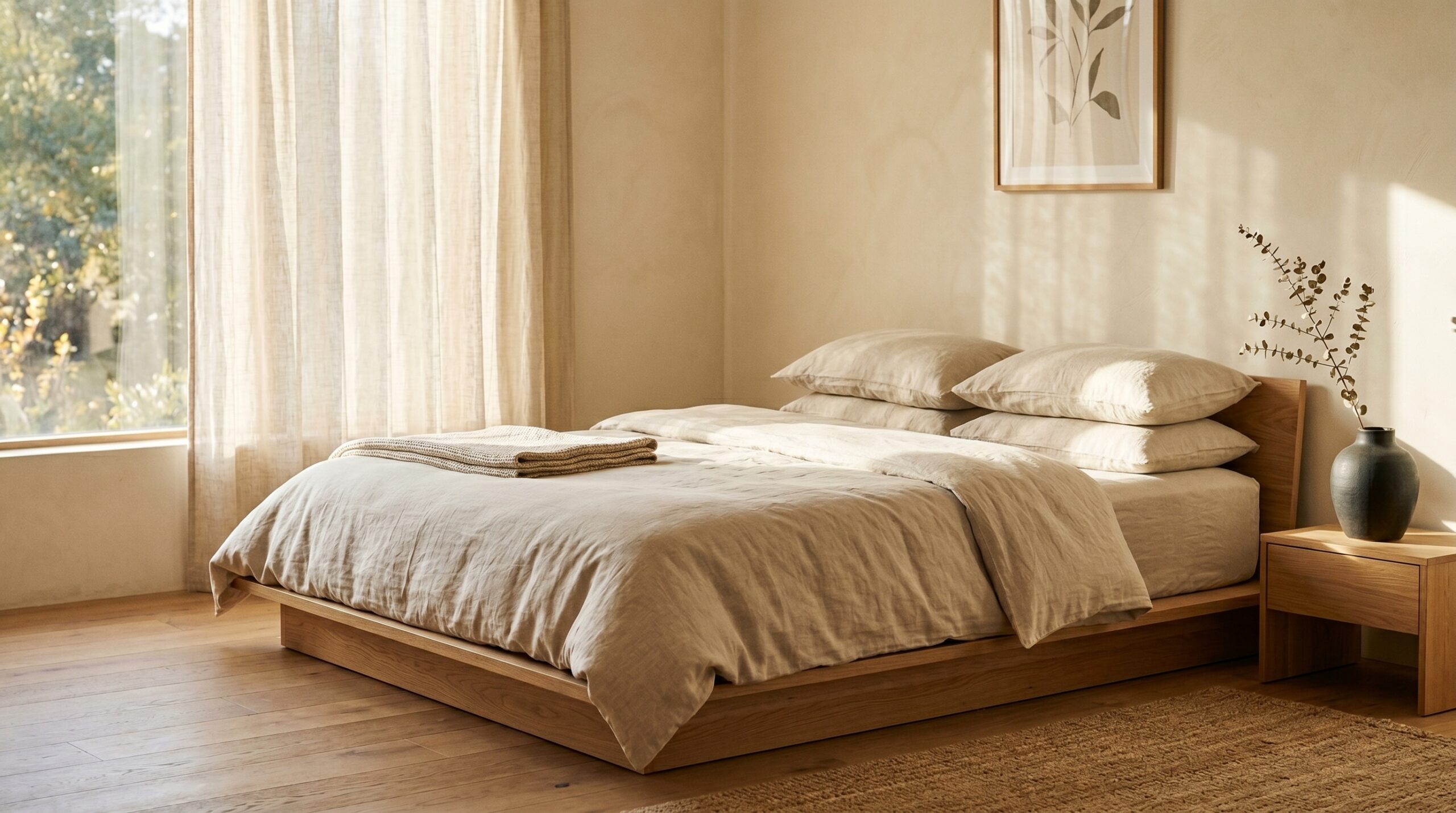
Japandi Bedroom Ideas: The Definitive Visual Guide for Calm Sleep (2026)
You fall into bed exhausted, but the visual clutter around you makes it impossible for your mind to switch off – sound familiar? A japandi bedroom strips away everything that competes for your attention, leaving only the materials, textures, and quiet beauty that actually help you rest. It’s not about having less. It’s about keeping only what earns its place.
This guide covers everything: palette, furniture, lighting, texture, and the small elevated details that separate a room that looks japandi from one that genuinely feels it.
Quick answer: A japandi bedroom combines Japanese minimalism and Scandinavian warmth to create a calm, clutter-free sleep space. It relies on a muted neutral palette, natural wood and linen textures, low-profile furniture, and deliberate negative space. The result is a room that feels intentionally simple, visually restful, and deeply functional.
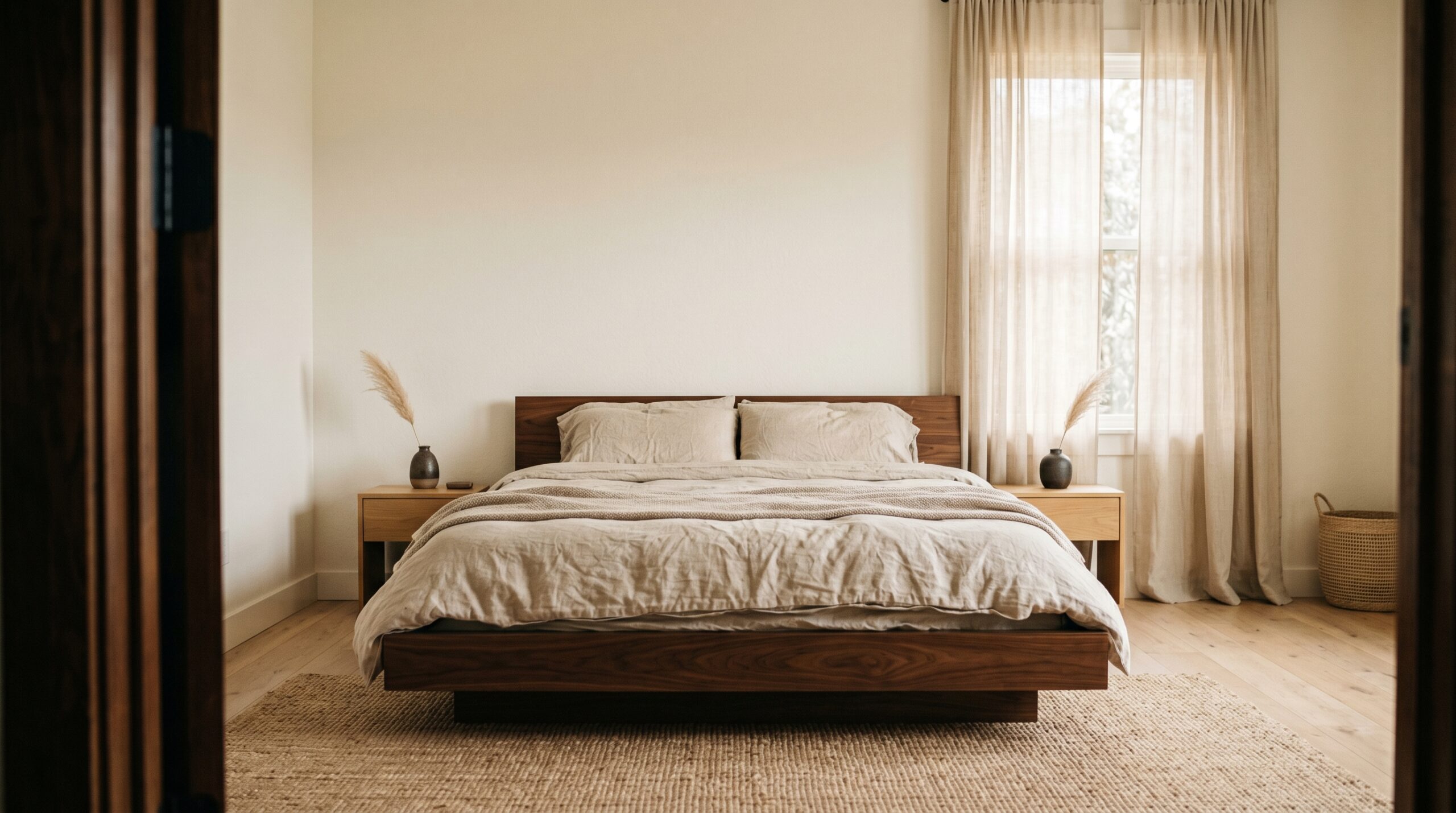
What Is a Japandi Bedroom? (And Why It’s More Than Just ‘Minimalist’)
Japandi sits at the intersection of two philosophies that, on the surface, seem to come from different emotional registers. Japanese wabi-sabi finds beauty in imperfection, transience, and the quiet dignity of natural materials. Scandinavian hygge leans into warmth, soft light, and the particular comfort of a space that holds you gently. The bedroom is where this fusion makes the most sense – because sleep requires the mind to genuinely release stimulation, not just reduce it.
Most people assume japandi is simply minimalism with wood tones. It isn’t. Generic minimalism removes things. Japandi replaces them with intention. Every object that stays in the room earns its place through beauty, utility, or emotional resonance – and it often earns its place through all three at once.
Two principles set japandi bedroom decor apart from every other calm bedroom trend. First, proximity to nature: materials that came from the ground, light that behaves like it came from the sky, and at least one living thing in the room. Second, the Japanese concept of ‘ma’ – meaningful empty space. Not empty because you ran out of ideas. Empty because the space itself is part of the composition.
If you want to go deeper into the philosophy before diving into the practical, The Wabi-Sabi House is a grounding read that shaped a lot of how we think about this at Noro Decor.
The Japandi Bedroom Colour Palette: Building Calm from the Ground Up
Colour in a japandi bedroom isn’t chosen for visual interest. It’s chosen to lower the room’s stimulation level – and there’s genuine science behind why certain tones support sleep onset better than others. Warm whites, greige, soft charcoal, clay, sage, and muted terracotta all work because they reflect warm-spectrum light and avoid the cool, high-contrast cues that keep the brain alert. Bright whites and cool greys do the opposite. They read as daytime. They signal ‘stay awake.’
The most reliable framework here is the 60-30-10 rule, applied with japandi restraint.
The 60-30-10 Rule in Practice
Sixty percent of the room’s visual weight should be your dominant neutral – typically the wall colour and flooring. Think Farrow & Ball ‘Elephant’s Breath,’ Benjamin Moore ‘Pale Oak,’ or Sherwin-Williams ‘Accessible Beige’ (see current shades and pricing). These are warm without reading as yellow, grounded without reading as grey.
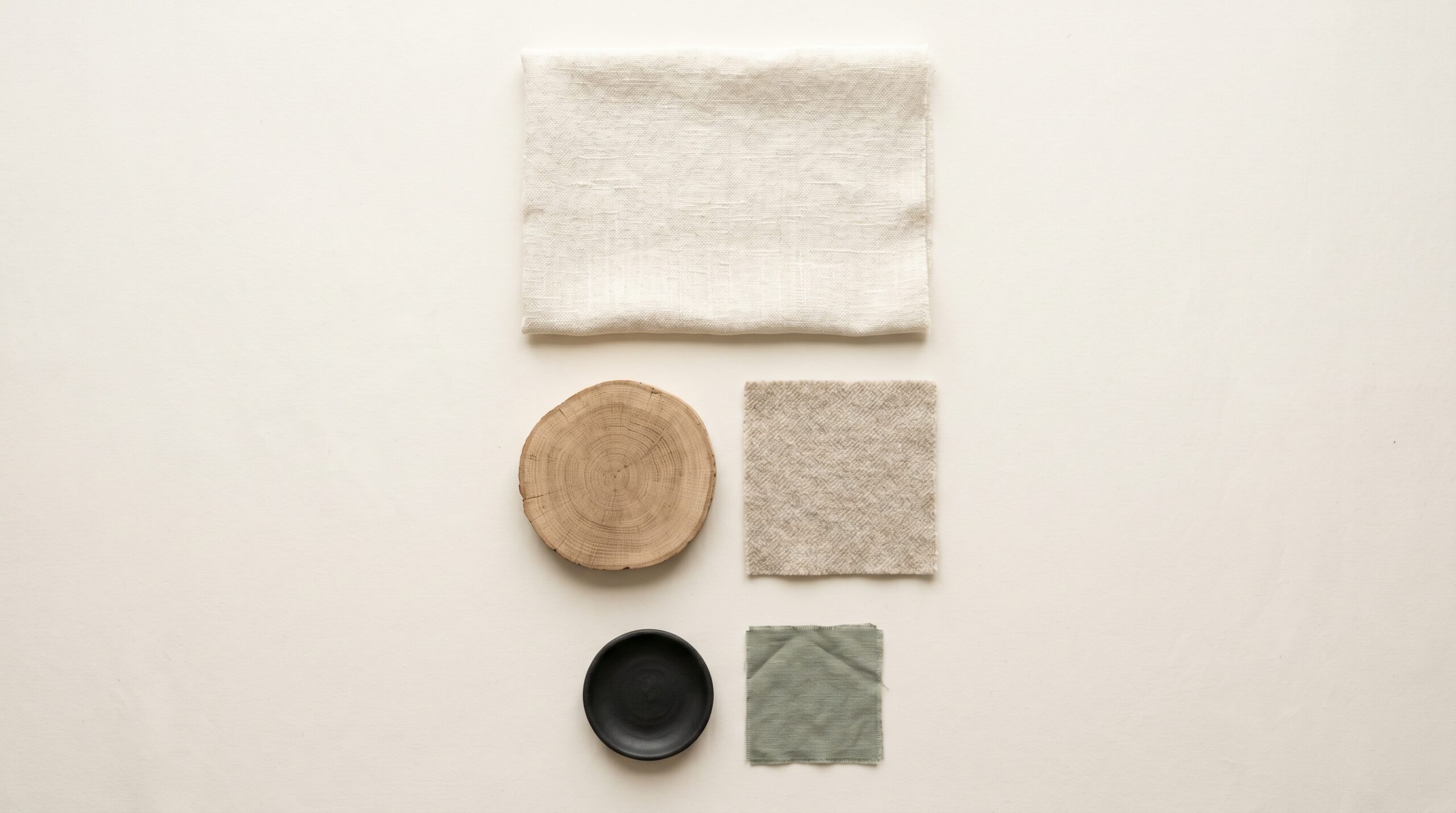
Thirty percent comes from your natural wood tones and textile layers – the oak bed frame, the linen duvet, a folded wool throw at the foot of the bed. This is where most of the room’s visual warmth actually lives, not on the walls.
The remaining ten percent is your single intentional accent. Muted olive. Dusty blush. Ink black. Choose one and use it sparingly. A single ceramic vase in one accent tone reads beautifully. Three items in three different accent tones reads like indecision.
The Three Colour Mistakes to Avoid
Going too cool is the most common error – you end up with a room that looks Scandinavian in a clinical, Instagram-flat way rather than warm and human. Going too dark loses the airy quality of ‘ma.’ And adding more than one accent colour is where even experienced decorators slip – each new tone is a small visual argument the eye has to resolve before it can rest.
Greige is passive. Japandi neutrals are intentional. That distinction is worth sitting with before you reach for a paint brush.
Japandi Bedroom Furniture: Choosing Pieces That Earn Their Place
The bed is everything. In a japandi bedroom, the platform or low-profile bed isn’t just a stylistic preference – it’s a philosophical one. A low bed references the Japanese tatami tradition, visually lowers the room’s centre of gravity, and creates breathing room between the sleeping surface and the ceiling. That vertical negative space matters. It’s part of the composition.
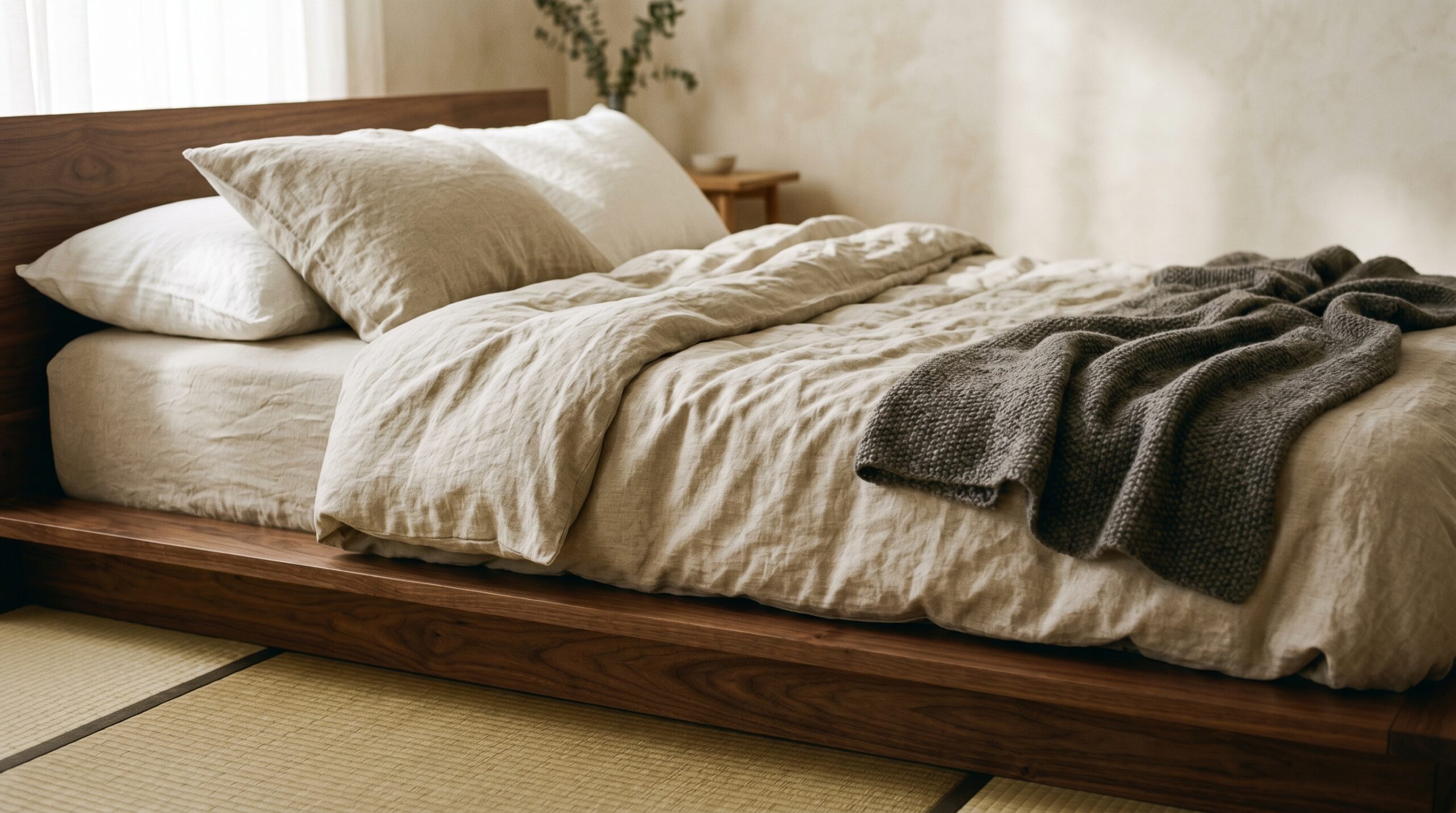
Look for frames in solid oak, walnut, or ash with clean, unornamented lines and visible wood grain. The Article ‘Mod’ bed frame and Muji’s platform bed are both strong mid-range choices. If you’re working with an existing IKEA MALM, a practical hack is adding solid oak veneer panels to the headboard and base – it lifts the look significantly for a fraction of the cost, and we’ve covered this in detail over at japandi on a budget.
Supporting Furniture: Less Than You Think
Most people bring too much furniture into a bedroom. Two or three pieces is the target.
A single low floating shelf does the work of a full wardrobe when used for curation rather than storage. A simple wooden stool as a nightstand – rather than a bulky bedside table – keeps the floor plan open. A minimalist dresser with integrated pulls rather than decorative hardware disappears into the room rather than competing with it.
The Craft Principle
Here’s the detail most guides skip: look for furniture that shows the hand that made it. Visible joinery. A slightly irregular wood grain. A hand-finished surface with its own character. This is where wabi-sabi enters the bedroom – not as a mood board aesthetic, but as a genuine preference for objects that carry the evidence of human craft over factory uniformity.
Texture and Natural Materials: The Secret to a Japandi Bedroom That Feels Alive
Because colour is restrained and pattern is nearly absent in japandi bedroom decor, texture carries the full weight of visual and tactile warmth. This is the single most important thing to understand about the style. If you get the texture right, the room feels alive. If you skip it, you end up with what designers call the ‘dead room’ – technically minimalist, but cold and uninviting in a way that’s hard to pinpoint.
The core material vocabulary is specific: linen, cotton, raw oak, rattan, handmade ceramic, washi paper, natural stone. These materials share a quality – they all look slightly different up close than from a distance, which gives the eye something quiet to discover without overwhelming it.
Layering by Zone
Start with the bed. A linen duvet cover in a warm neutral, cotton pillowcases in a tone slightly lighter or darker, and a wool throw folded at the foot – that’s three textures in one place, all within the same tonal family.
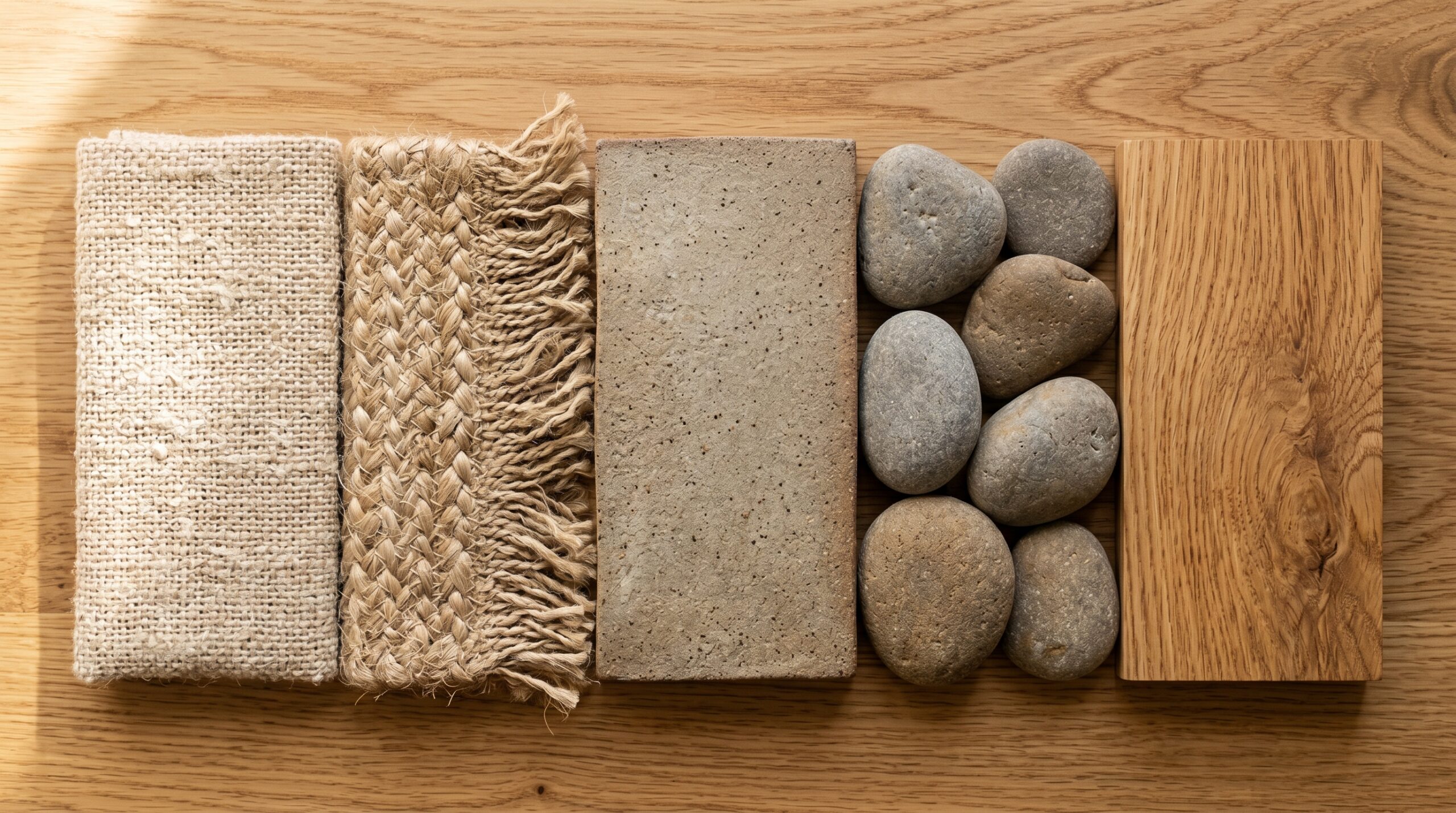
On the floor, a natural jute rug over bare hardwood or concrete adds warmth underfoot and an organic irregularity that softer rugs don’t. The IKEA OSTED is an honest, affordable starting point.
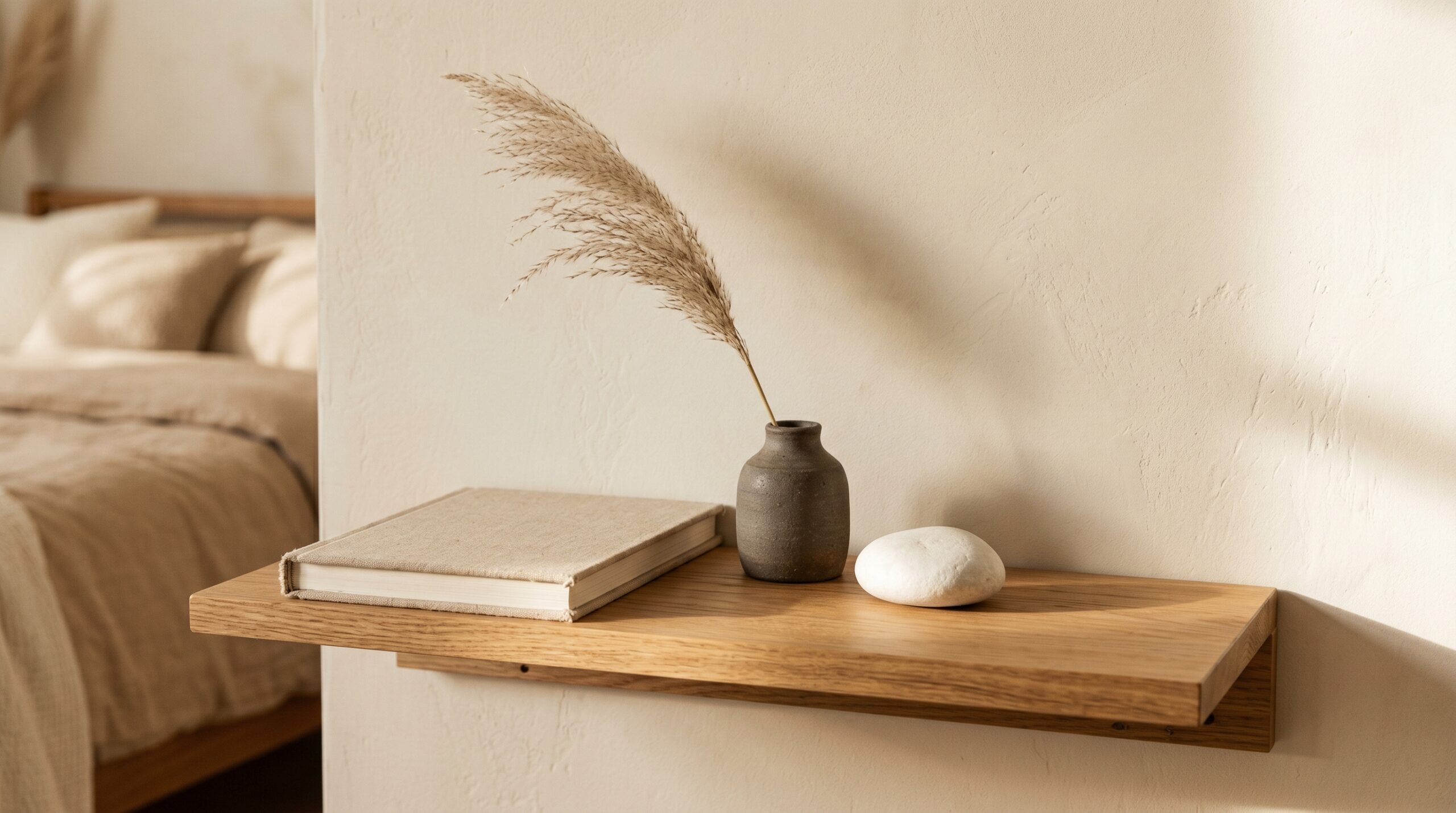
Walls benefit from texture too, even if subtly. A washi paper lampshade, a single framed ink print, or a limewash plaster finish all add dimension without pattern. On surfaces, keep it to three objects maximum: a handmade ceramic tray, a single bud vase, a smooth river stone. These aren’t decorations. They’re quiet punctuation.
The Scandinavian hygge element shows up here most clearly – in the softness, the touchability, the sense that the room wants to be inhabited rather than admired from a doorway.
Japandi Bedroom Lighting: Designing for the Feeling of Dusk, Not Day
The japandi lighting philosophy is simple to state and surprisingly easy to execute: light should feel borrowed from nature, not installed by an electrician. That means layered, warm, and dimmable – never bright, never uniform, never blue-white.
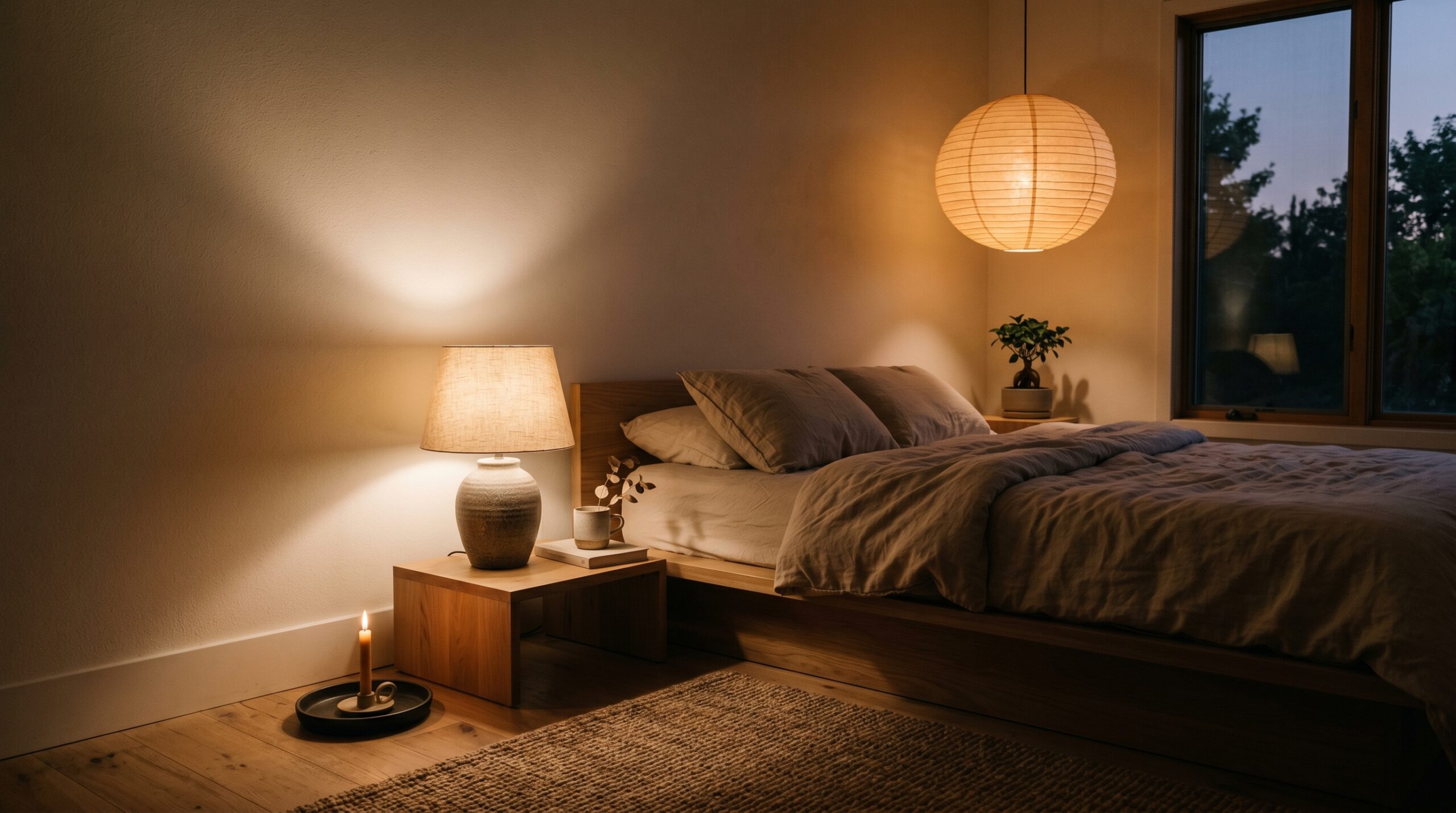
Three layers is the target. Ambient light from a warm overhead source, ideally on a dimmer. Task light from a single low-wattage bedside lamp in a natural material – a handthrown ceramic base lamp is the most elegant choice here, something close to HAY or Menu in feel if not always in price. And accent light from a candle or a washi paper floor lantern positioned in a corner to create what’s often called a ‘dusk pool’ – a warm glow that doesn’t illuminate the whole room, just softens one corner of it.
Bulb Temperature Is a Design Decision
This is non-negotiable: 2700K to 3000K warm white LEDs only. Cool white bulbs at 4000K or above don’t just look wrong in a japandi bedroom – they actively disrupt circadian rhythm signalling, telling your brain to stay alert when the whole point of the room is to help you release the day. The design choice and the sleep science land in exactly the same place.
For a low-effort upgrade, IKEA Tradfri or Philips Hue smart bulbs set to warm white give you dimming control without rewiring anything. Think of it as a japandi bedroom lighting kit – pendant, lamp, and smart bulbs chosen together.
Step-by-Step: How to Bring a Japandi Bedroom Together (8 Actionable Steps)
This is where the philosophy becomes a weekend project. Each step is ranked by effort so you can triage based on time and budget.
Step 1 – Edit ruthlessly. Remove everything from every surface. Return only what is functional or genuinely beautiful. Effort: Easy. Cost: Free.
Step 2 – Paint or prep walls in a warm neutral from the approved palette. Farrow & Ball ‘Elephant’s Breath’ or Benjamin Moore ‘Pale Oak’ are reliable starting points. Effort: Weekend. Cost: $100-300.
Step 3 – Switch your bedding to natural linen in a tone-on-tone neutral. Cultiver and Bed Threads both make reliable options available online. Effort: Easy. Cost: $80-200.
Step 4 – Lower your bed. Replace your frame with a platform bed, or hack your existing frame to sit closer to the floor. See our japandi on a budget guide for the IKEA approach. Effort: Weekend to investment. Cost: $0-800.
Step 5 – Add a natural fibre rug. A jute or seagrass rug under the bed grounds the room immediately. Effort: Easy. Cost: $60-250.
Step 6 – Choose one statement lighting piece in a natural material – a woven pendant or a ceramic lamp base. Just one. Effort: Easy. Cost: $40-180.
Step 7 – Introduce one living plant. A snake plant, peace lily, or small moss arrangement in a simple ceramic pot. One plant. Not a collection. Effort: Easy. Cost: $20-60.
Step 8 – Apply the three-object rule to every visible surface. One surface. Three objects maximum. Everything else goes to storage. Effort: Easy. Cost: Free.
Japandi Bedroom Checklist – Screenshot This
- [ ] Surfaces edited to three objects maximum
- [ ] Walls in warm neutral paint
- [ ] Linen bedding in tone-on-tone neutral
- [ ] Low-profile or platform bed
- [ ] Natural fibre rug in place
- [ ] One natural material lighting piece
- [ ] One living plant in a ceramic pot
- [ ] All remaining clutter in storage
7 Common Japandi Bedroom Mistakes (And How to Fix Them Fast)
Of all the sections in this guide, this one tends to be where people recognise themselves. That’s the point. These mistakes are easy to make precisely because they each feel like the right call in the moment.
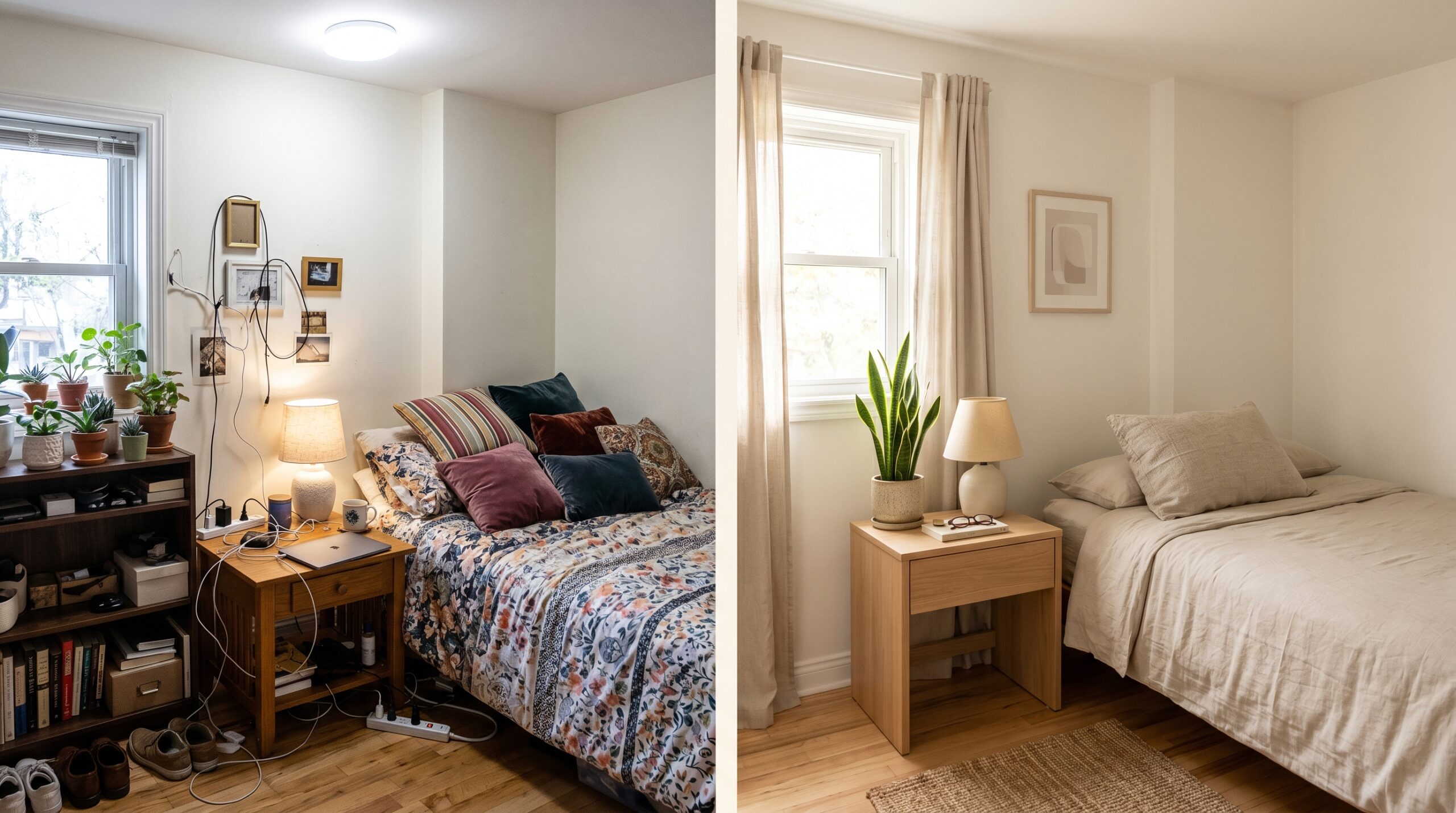
1. Choosing grey instead of warm neutral. Cool grey reads as corporate, not calm. Fix: repaint with a warm white or greige – the difference is immediate and significant.
2. Using open shelving as storage rather than curation. A shelf crowded with books and objects becomes visual noise, not visual intention. Fix: apply the one-object-per-shelf rule and move everything else out of the room.
3. Mixing too many wood tones. A light ash floor, a mid-oak bed frame, and a dark walnut dresser don’t harmonise – they compete. Fix: commit to one dominant wood species and treat the others as accidental rather than designed.
4. Over-planting. It’s easy to see plants as inherently calm. A collection of twelve small pots reads as clutter. Fix: one or two plants maximum, in simple ceramic pots with room to breathe around them.
5. Using synthetic fabrics. Polyester bedding and microfibre throws undermine the natural material foundation. This one is easy to overlook because synthetic fabrics often come in the right colours. Fix: audit your textiles and replace them with linen, cotton, or wool – natural linen bedding is the highest-return swap here.
6. Bright white LED lighting. This single change makes more difference than almost anything else. Fix: switch to 2700K warm white bulbs immediately. It takes ten minutes and costs under $30 for smart bulbs.
7. Treating japandi as a one-time decoration project. This is the subtlest mistake and the hardest to fix. Japandi is an ongoing editing habit. Objects accumulate. The practice is noticing when they have, and removing them again – not as a failure, but as maintenance.
Expert Tips: 5 Details That Separate a Good Japandi Bedroom from a Great One
These are the details that most guides don’t reach. They assume you’ve done the structural work – the palette, the furniture, the texture layering – and they’re asking what pushes a room from well-executed to genuinely memorable.
1. Scent as a sixth design layer. Japandi engages the senses that minimalism ignores. A single natural fragrance – hinoki wood, white tea, or cedar – introduced through a reed diffuser or candle anchors a consistent bedtime ritual in a way that no visual element can replicate. Scent memory is powerful. The room starts to signal ‘sleep’ before you’ve even turned the lamp down.
2. One piece of handmade art. A single framed ink brushstroke or sumi-e print from an independent maker does more for a wall than three generic prints from a mass-market retailer. The slight irregularity of a hand-drawn line carries the wabi-sabi principle directly onto the wall. It’s the most personal object in a deliberately impersonal space – which makes it the one thing your eye always returns to.
3. Hide every cable. Technology is the largest single threat to japandi bedroom calm – not because it’s technology, but because cables and chargers and device displays are visual noise of the highest order. A wooden cable management box on the nightstand handles most of it. The rest can go behind furniture. This is one of those fixes that takes an afternoon and changes the room’s feeling permanently.
4. A floor-level moment. Japanese ‘ma’ shows up beautifully in a low tray placed on the floor: a handmade ceramic cup, a single hardcover book with a linen cover, perhaps the reed diffuser from tip one. It signals intentional slowness – the Scandinavian concept of ‘lagom,’ enough and not more, expressed as a small tableau near the ground.
5. Rotate, don’t accumulate. Instead of adding objects with each season, swap them. A spring moss plant becomes a winter arrangement of dried pampas. A light cotton throw gives way to a heavier wool one. The object count stays constant. The room stays alive.
“The room that rotates stays edited. The room that accumulates stops being japandi and starts being just a bedroom.”
If these details resonate, the full Japandi Style Guide covers materials, furniture principles, and spatial layout at the same depth from a whole-home perspective.
Related Reads
- 27 Japandi Bedroom Ideas for a Calm, Clutter-Free Sanctuary
- Japandi Bedroom Color Palettes: 9 Schemes With Real Photos
- The Best Japandi Bed Frames Under $400 (Tested + Reviewed)
- How to Style a Japandi Nightstand in 5 Pieces or Less
- Small Japandi Bedroom: A Real $600 Renter’s Makeover
- 31 Japandi Living Room Ideas for Quiet, Considered Spaces
FAQ
What is a japandi bedroom?
A japandi bedroom is a sleep space that blends Japanese minimalism with Scandinavian warmth. It uses a muted neutral palette, natural materials like oak and linen, low-profile furniture, and deliberate empty space to create a calm, clutter-free environment that actively supports rest and mental decompression.
How do I start decorating a japandi bedroom on a budget?
Start with the highest-impact, lowest-cost changes first: swap synthetic bedding for natural linen, replace bulbs with warm 2700K LEDs, and edit your surfaces down to one or two intentional objects. These three steps cost under $150 and immediately shift the room’s feeling toward japandi calm. For a full budget approach, see our dedicated japandi on a budget guide.
What colours should I use in a japandi bedroom?
Use warm, muted neutrals as your base – think warm white, greige, clay, soft sage, or muted charcoal. Avoid cool greys and bright whites, which read as clinical. Add depth through natural wood tones and textiles rather than additional colours. One subtle accent tone is the maximum for true japandi calm.
What kind of bed frame is best for a japandi bedroom?
A low-profile or platform bed in solid oak, walnut, or ash is ideal. The frame should have clean, unornamented lines with visible wood grain. Floor-level or close-to-floor beds reference the Japanese tatami tradition and visually lower the room’s centre of gravity, making the space feel more grounded and restful.
Should I use plants in a japandi bedroom?
Yes, but use restraint – one or two plants maximum. Choose architectural, low-maintenance varieties like a snake plant, peace lily, or a small moss arrangement in a simple ceramic pot. Avoid groupings of many small plants, which create visual noise. A single well-chosen plant adds a living, natural quality without clutter.
How is japandi bedroom decor different from regular minimalist bedroom ideas?
Regular minimalism focuses on removal – less stuff, empty surfaces, neutral tones. Japandi bedroom decor goes further by requiring that what remains has warmth, craft, and intentionality. It layers natural textures, honours imperfection in materials, and incorporates a sense of human touch that pure minimalism often strips away.
What lighting is best for a calm japandi bedroom?
Layer three light sources: a dimmable warm ambient overhead, a single bedside lamp with a ceramic or natural material base, and a floor-level washi paper lantern or candle for evening wind-down. Always use bulbs rated 2700K-3000K warm white. Avoid cool white LEDs – they disrupt both the aesthetic and your sleep quality.
How do I add texture to a japandi bedroom without making it look busy?
Stick to natural materials in a limited tonal range – linen, raw oak, rattan, handmade ceramic, and wool. Vary the texture within your neutral palette rather than adding new colours. A greige linen duvet, an oat wool throw, and a natural jute rug all read as different textures within the same calm tone family. That’s the approach: more depth, not more variety.